

This month’s Bibliotheca Blog Circle theme is Picnic, and as tempted as I am to once again shoehorn a (gelatin) dessert in there somehow, I really can’t. It’s not that there aren’t potentially picnic-friendly options, however. No, the reason is I am a steadfast adherent of “Bring savory dishes to the potluck/picnic/party”. Ah, an imaginary reader exclaims, but Kelp! There are…savory gelatin dishes…
Yes, indeed. But as someone allergic to fish and intolerant of highly acidic foods, as much as I want to try some of those out, I really can’t. Vintage gelatin salads often are a minefield for anyone with acid reflux – tomato juice and pimentos set with lime-flavored gelatin, to give one example. The one savory gelatin dish I’ve come across that I could eat without issue is a Jambon Chaud-Froid, which is basically a cold ham coated in a gelatinized Béchamel sauce, which, once set, is glazed with a clear aspic, into which you set a pretty design creatively crafted from edible decor.

You can see why I haven’t attempted one of these yet. But this person sure did! And they used food critic middle voice!
So if not gelatin, what am I gonna write about? Checks!
Checks?
Okay, so the connection is a little tenuous, but bear with me. The first thing I think of when it comes to Picnics is Gingham, which is a small check fabric.
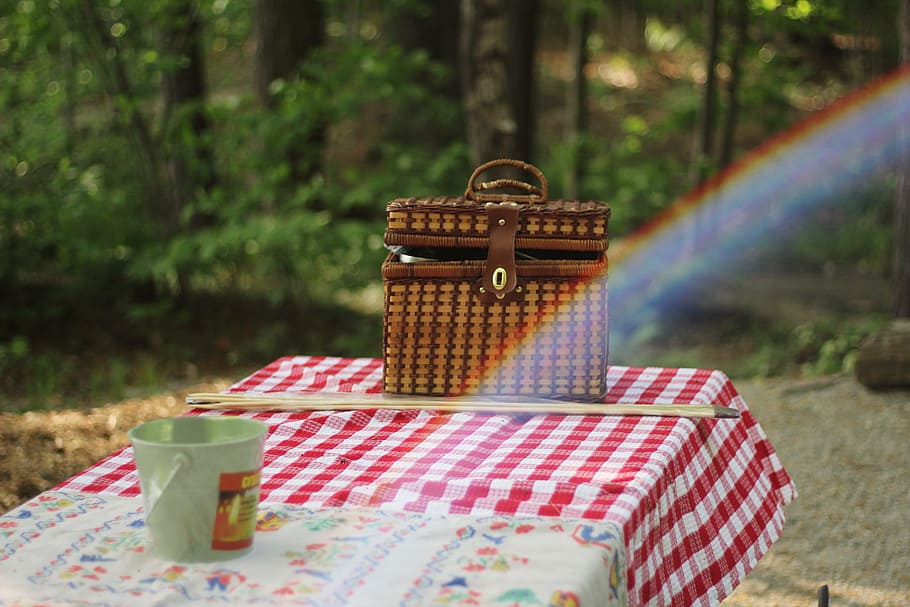
When I saw this stock photo, how could I pick anything else?
And something I’ve been thinking about a lot is the disconnect that inevitably results when Japanese terms for textiles and clothing get translated into English. Specifically, there’s two perennial problems:
- The Japanese term has a wider or otherwise different scope compared to the English term
- Boring example: In addition to the loanword ティアード tiādo ‘tiered’, Japanese fashion brands will sometimes use ~段 ~dan for “tier” or “layer”.
But it can also mean “level”, as in 二段階認証 “Two-factor authentication”. This means machine translation will sometimes spit out item names like “Three-level Skirt”.
- Boring example: In addition to the loanword ティアード tiādo ‘tiered’, Japanese fashion brands will sometimes use ~段 ~dan for “tier” or “layer”.
- The Japanese term has an English equivalent, but it’s fairly technical and therefore not readily understood by the average speaker.
- In some cases, the Japanese term is also sometimes more of an industry term…let’s just say I’ve learned a lot about very specific knits and weaves trying to translate stuff.
I’ve seen both of these cases come up in terms of checks. Right from the get go, I can say that most of us Americans don’t really use the superordinate term ‘check’, as opposed to the narrower term ‘plaid’, which is quite common. But there’s yet another reason I wanted to talk about textiles.
Everybody Loves Checks
I think many people in the US associate checks with tartan, or again, ‘plaids’ as is common in US English. And even a quick glance at the English wikipedia page for checks predictably focuses on Scottish textiles. But I have terrible news: Wikipedia is well-known to especially suck when it comes to fashion info. In good news, however, Check Is Everywhere.
That’s right, what was trending bigtime in the Edo period? Benkei check!
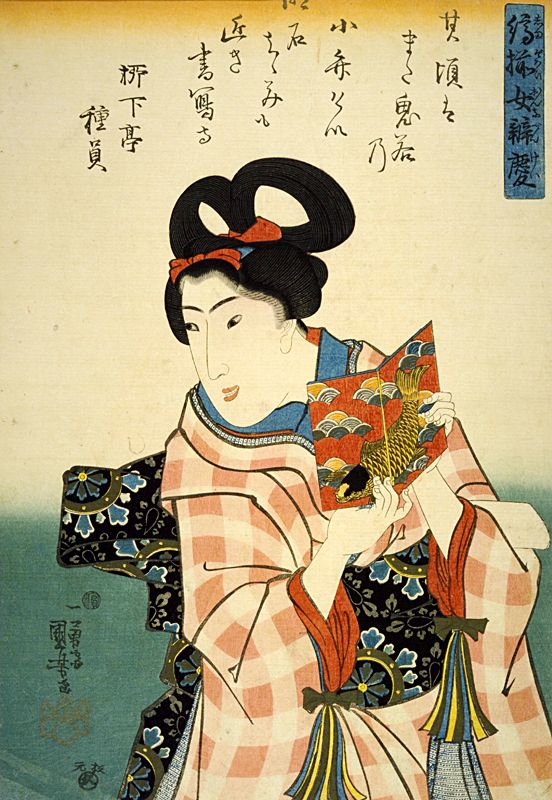
「縞揃女弁慶 鬼若と鯉」by Utagawa Kuniyoshi (woodblock print, 1844)
Kelp, are we talking The Benkei? Yep. Named after the warrior monk himself! Well. Sorta. It’s complicated, but basically various stage costumes are credited for the overall trend.

Danshichi Kurobē and Issun Tokubē wearing 弁慶格子 benkei-goushi ‘Benkei check’ from the kyōgen play『夏祭浪花鑑』natsu matsuri naniwa kagami “Summer Festival in Naniwa (Osaka)” (I found a nice English description of the bunraku puppet version.)

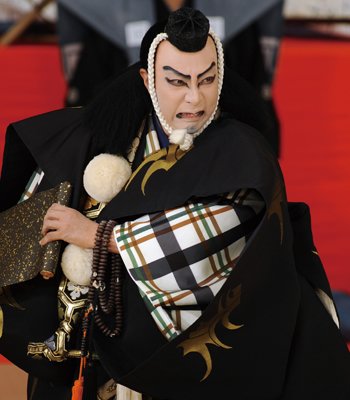
Photos taken from a tweet by @kimonoichiban:
“A popular check obi…Called okina-goushi (‘grandfather check’) because of the wide stripe criss-crossed by many small ‘grandchild’ stripes…Also the design worn by Benkei in kabuki plays. (benkei-goushi is a different pattern than above, which can be confusing.)”

The triplets Umeoumaru, Matsuoumaru, and Sakuramaru from the kabuki play『菅原伝授手習鑑』 “Sugawara and the Secrets of Calligraphy” wearing their signature purple 童子格子 douji-goushi. Here’s a nice English language exhibit of other prints from this play.
Nowadays, it’s pretty common to see the loanwords ストライプ sutoraipu and チェック chekku when browsing online shops. But sometimes you might run into 縞 shima and 格子 koushi, aka stripes and…lattices?
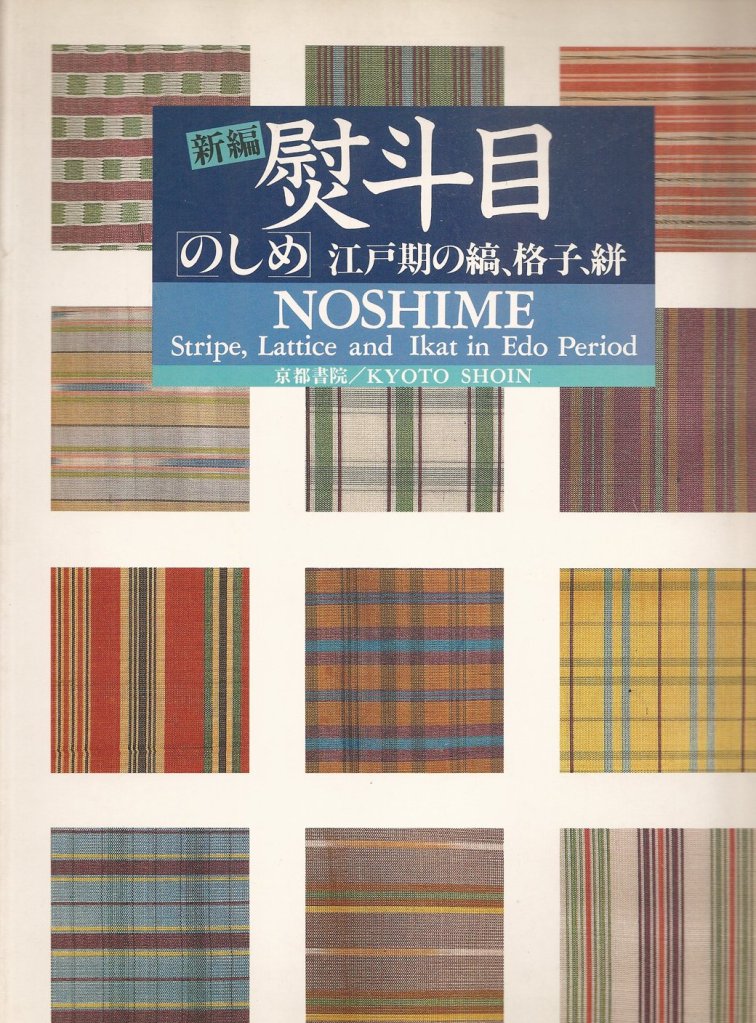

I’m not a textiles expert, but all the other research I found translated 格子 koushi as ‘check’, so we’ll stick with that. My point is that, at the end of the day, checks are just…squares. And pre-synthetic dyes, your color choices were similarly limited. As such, a lot of Japanese checks look much the same as those we’re familiar with in the West.
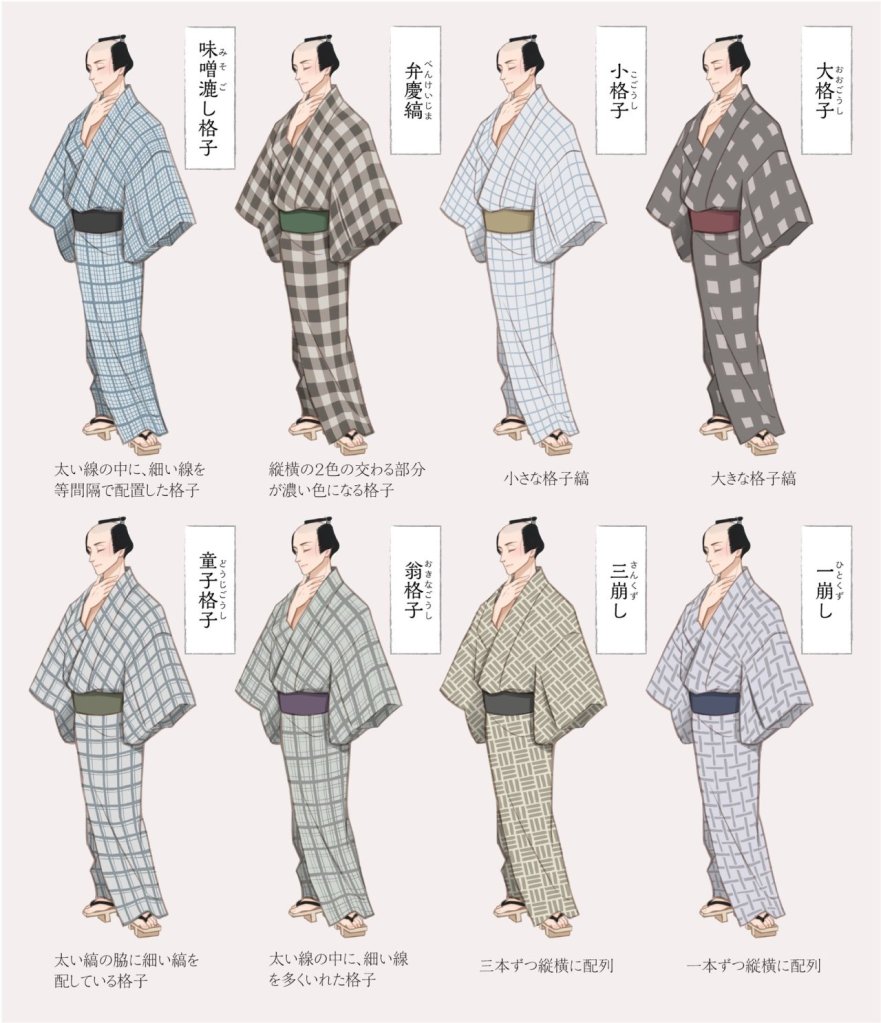
From a tweet by @nadeshicorin, which adds 味噌漉し格子 misogoshi-goushi ‘miso strainer check’, as well as 子格子 kogoushi and 大格子 oogoushi ‘small check, large check’ to the list.
That’s not to say all checks pop up in both places, though – despite being called 千鳥格子 chidori-goushi ‘thousand-bird check’, my cursory research suggests that houndstooth at least was a Western import. Even more checks courtesy of this blog post below.

Sometimes they’re tessellated squares. Also, now I know how to say tessellation in Japanese.
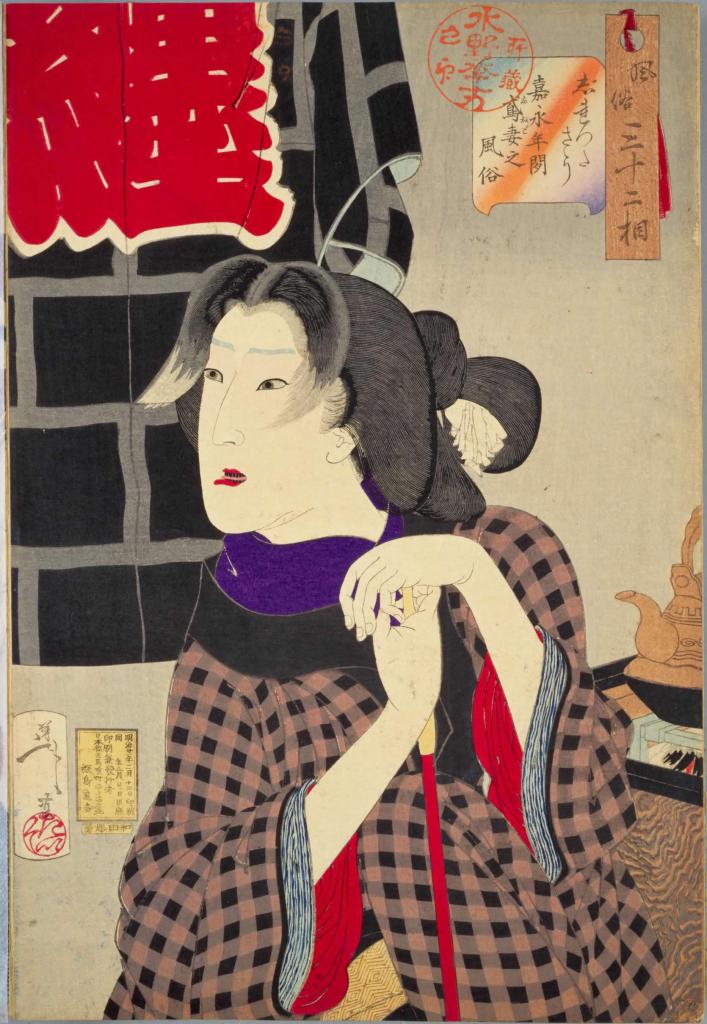
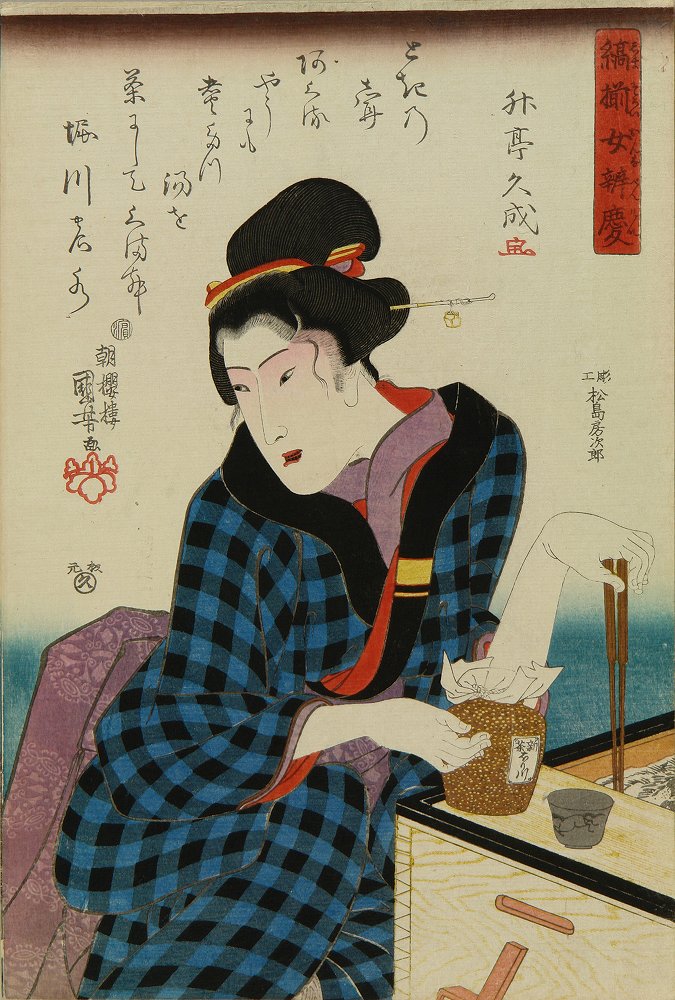
Checks were so trendy (how trendy were they Kelp?) that a lot of the images below are from a whole series of woodblock prints just called “Sexy Ladies in Stripes”- okay no, it’s 縞揃女弁慶 from Utagawa Kuniyoshi, but honestly same difference. (The others are from 風俗三十二相 “Thirty-Two Aspects of Customs and Manners” by 月岡芳年 Tsukioka Yoshitoshi.)

What us Americans call “buffalo check”
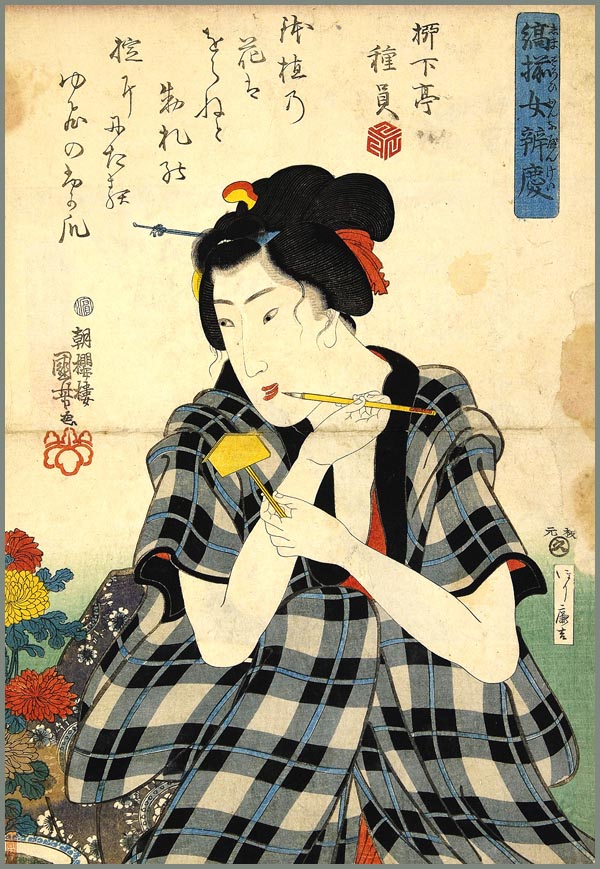
Think this would be a 越格子 koshi-goushi, or ‘overcheck’



Western-style dress with ‘miso strainer’ check trim
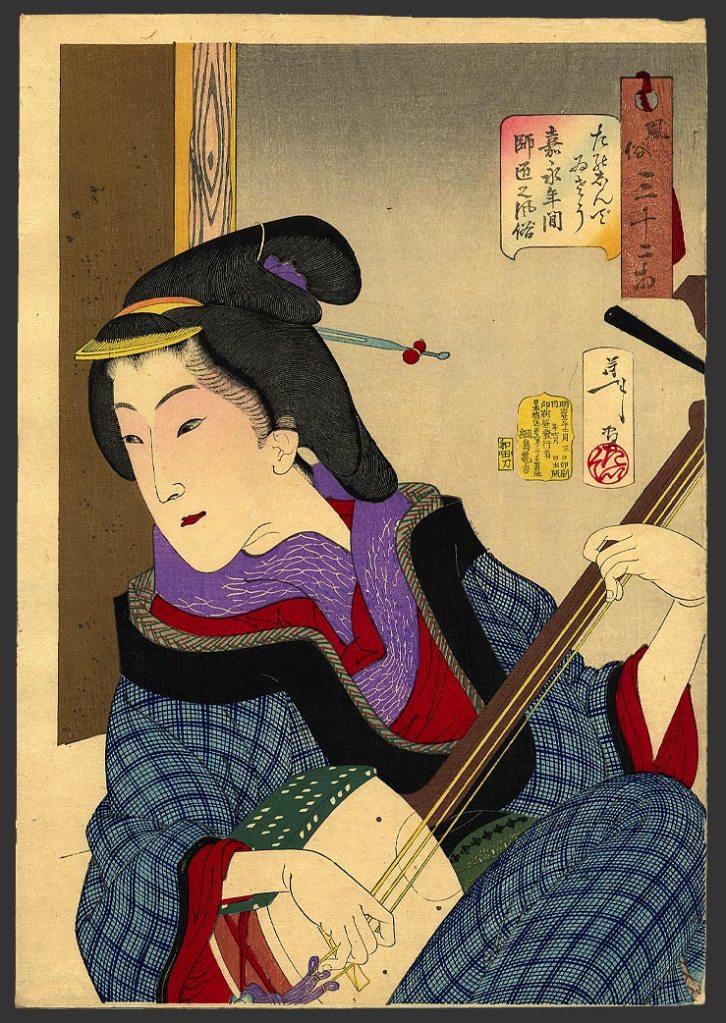
三枡格子 mimasu-goushi perhaps?
My Last Attempt To Tie This Back Into Something You’re Interested In
There’s One Last Reason I have checks on the brain – this 1994 Zipper interview with Japanese fashion brand MILK regarding “What even is lolita fashion?”. (Shoutout to Raine Dragon’s post for putting it on my radar!) The quote that really stood out to me, and I’m sure to most readers, is the following:
“What’s now called lolita fashion, I think is what MILK has been putting out for a long time”
Zipper – October 1994, p73
It sounds like kind of a flex, but honestly? After combing through early 90’s CUTiE magazines, I think they’re right and they should say it. The only other brand that popped up with the same consistency in early lolita coordinates was Jane Marple. By that I mean, if a CUTiE girl said she was wearing “head-to-toe [BLANK]”, it was either MILK or JM.
What does this have to do with checks? Well, the second thing that popped out to me was “MILK recommends Checks!”. Their fall collection that year was so check-heavy that they went ahead and said it’s more ‘preppy’ than ‘lolita’, per se. They even released a reversible wrap skirt with, you guessed it, a different check on each side.
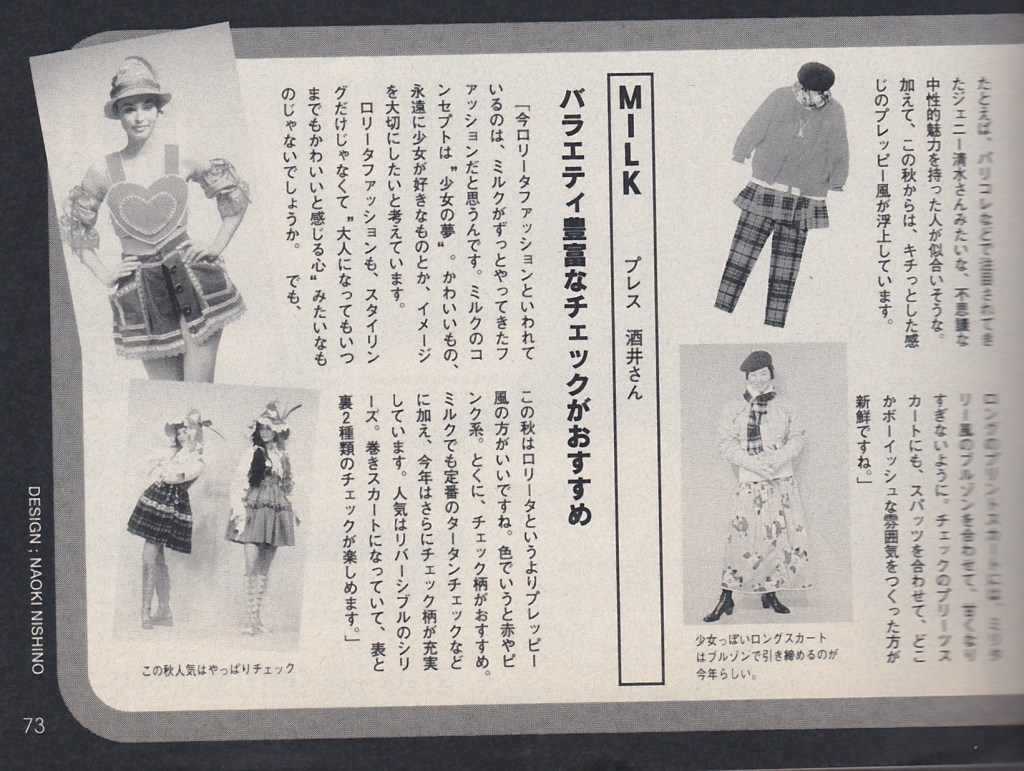
Thanks to LolitaHistory.com for the scan!
Today, scrolling through MILK’s Instagram, what will you find? A lot of check!
Check’s back on the menu, girls
It’s not just MILK either. Stripes and lattices- sorry, checks, are common across lolita fashion brands.
Some check releases from Victorian Maiden, Angelic Pretty, and Sheglit.
But Kelp, a second imaginary reader interjects, the use of タータンチェック ‘tartan check’ by these early ‘Designer Character’ brands is obviously influenced by alternative fashion in the UK, and not historical domestic trends in check fabrics, right? Aren’t you always re-affirming that lolita fashion is punk fashion?

Naomi Campbell wearing Vivienne Westwood (Fall 1994 Ready To Wear)
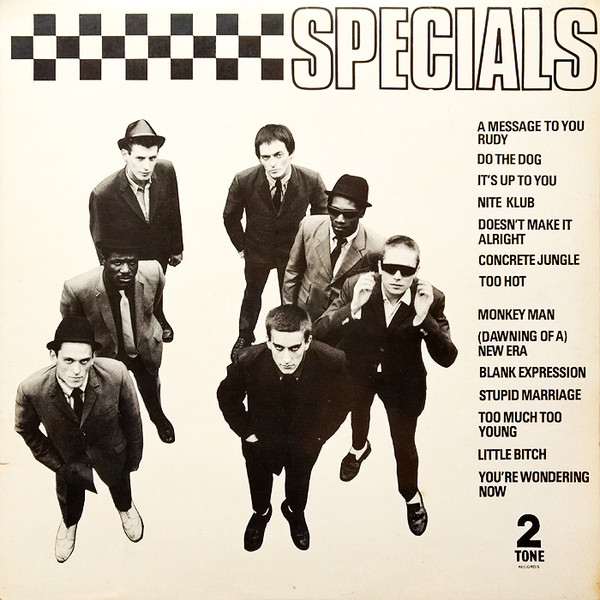
2-Tone era ska band The Specials, with the requisite checkerboard pattern
It sure is! This is where I could go on at length about ~intertextuality~ but that’s not my objective for this blog post. I just want to show you lots of cool pictures that I found. And put out a post that has something to do with this month’s theme. Check, and check. (Sorry.)
 kelp
kelp 