
I got a bit of a belated start on Jelly July this year, and didn’t want to slow things down even further in the Recipe Selection process, so I limited my search to a handful of Official Jell-o🄬 Cookbooks, one of which proudly displays my folly, the Rainbow Ribbon Mold.
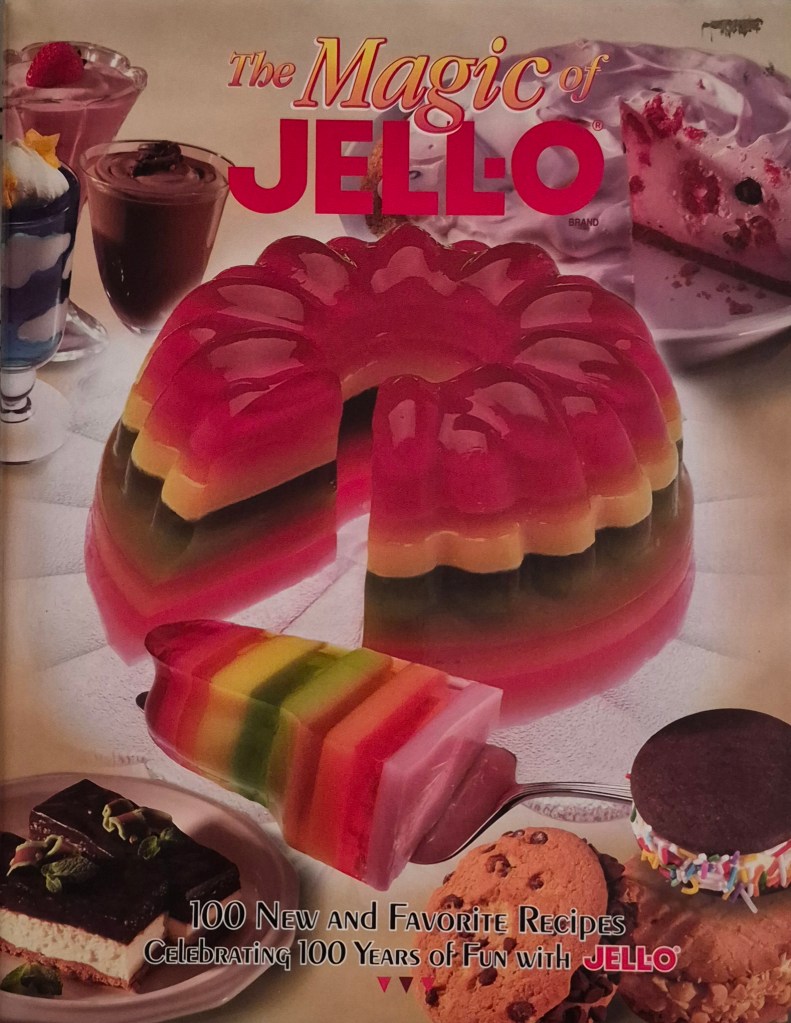
Did Berry Blue not exist at time of writing?
I still haven’t decided if I’m going to conquer this challenging dessert after my initial failure, but if I do, it will probably not be in the calendar month of July. With only one other household member to help me consume desserts, I have to be conscientious of not oversaturating our fridge with molds, and a Rainbow Ribbon Mold is…quite the mold.
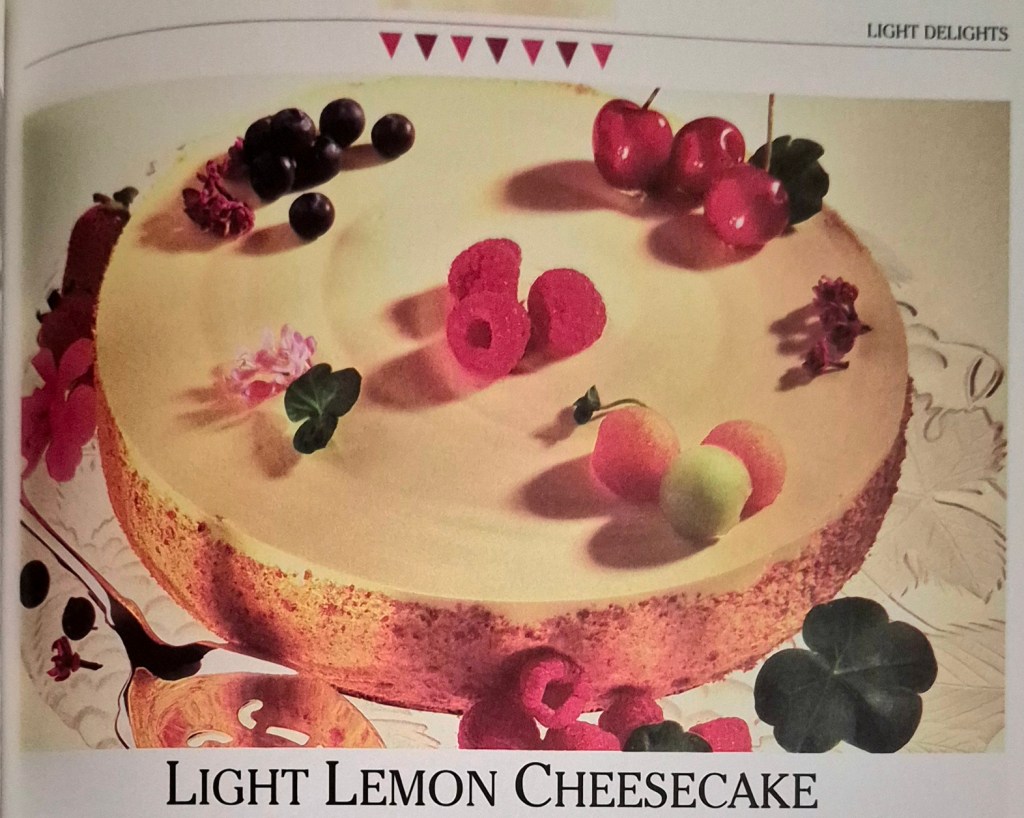
The Photo Was Of A Cheesecake…
Yes, sorry. The cheesecake is kind of boring, so I’m blabbing about other stuff. One of the cookbooks I grabbed for my Lemon-Containing Recipe Research was the above-pictured hardcover with lots of photos.
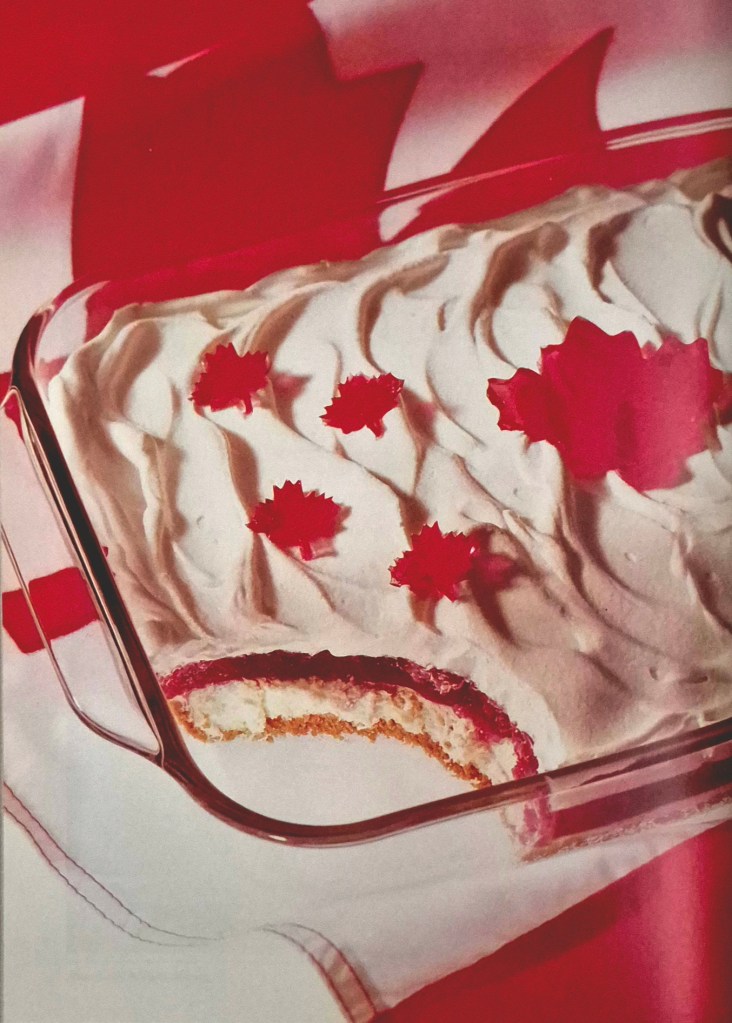
It’s also conspicuously Canadian
There, I found a no-bake cheesecake which, in addition to Lemon Jell-o, also used lemons. Great! Or so I thought. Upon closer inspection, I realized it was in the diet section, but that’s an easy fix – we won’t disappoint Gillian Anderson with light cream cheese, no no. I also opted to replace the Cool Whip🄬 with whipped cream, and luckily I’ve memorized that whipping cream typically doubles its volume.
A small aside – I think nowadays, recipes for no-bake cheesecakes just rely on the crust to hold the thing together instead of any sort of gelling agent. This official Philadelphia Cream Cheese no-bake cheesecake recipe (also diet again??) contains zero gelatin, as expected, even though Jell-o is owned by the same giant food corporation, Kraft Heinz. The last time I made a no-bake cheesecake I even gathered some statistics, and there was an expected dearth of gelatin in an unexpected dearth of no-bake recipes. I’m not really sure when it began to go out of fashion to use gelatin – my initial hypothesis is probably around the same time advertising that your product had minimal ingredients got trendy, but I feel it was before that. Anyways, I mention it here cuz I often encounter young people that are surprised a no-bake cheesecake falls under ‘gelatin mold’, but next time you buy a no-bake at the supermarket, check the ingredients. There’s prolly a gelling agent in there – my money’s on my cousin carrageenan.
So Everything Turned Out Fine?
Kind of. First off, the recipe has an interesting way of incorporating the traditional graham cracker crust. I am here to tell you that I highly doubt the cheesecake pictured was done solely with the technique described in the recipe. Don’t get me wrong, I love Convenience. But spraying cooking spray on the springform and sprinkling doesn’t adhere anywhere near the thickness of crumb shown. This is the exact kind of shenanigans I associate with short-form video charlatans.
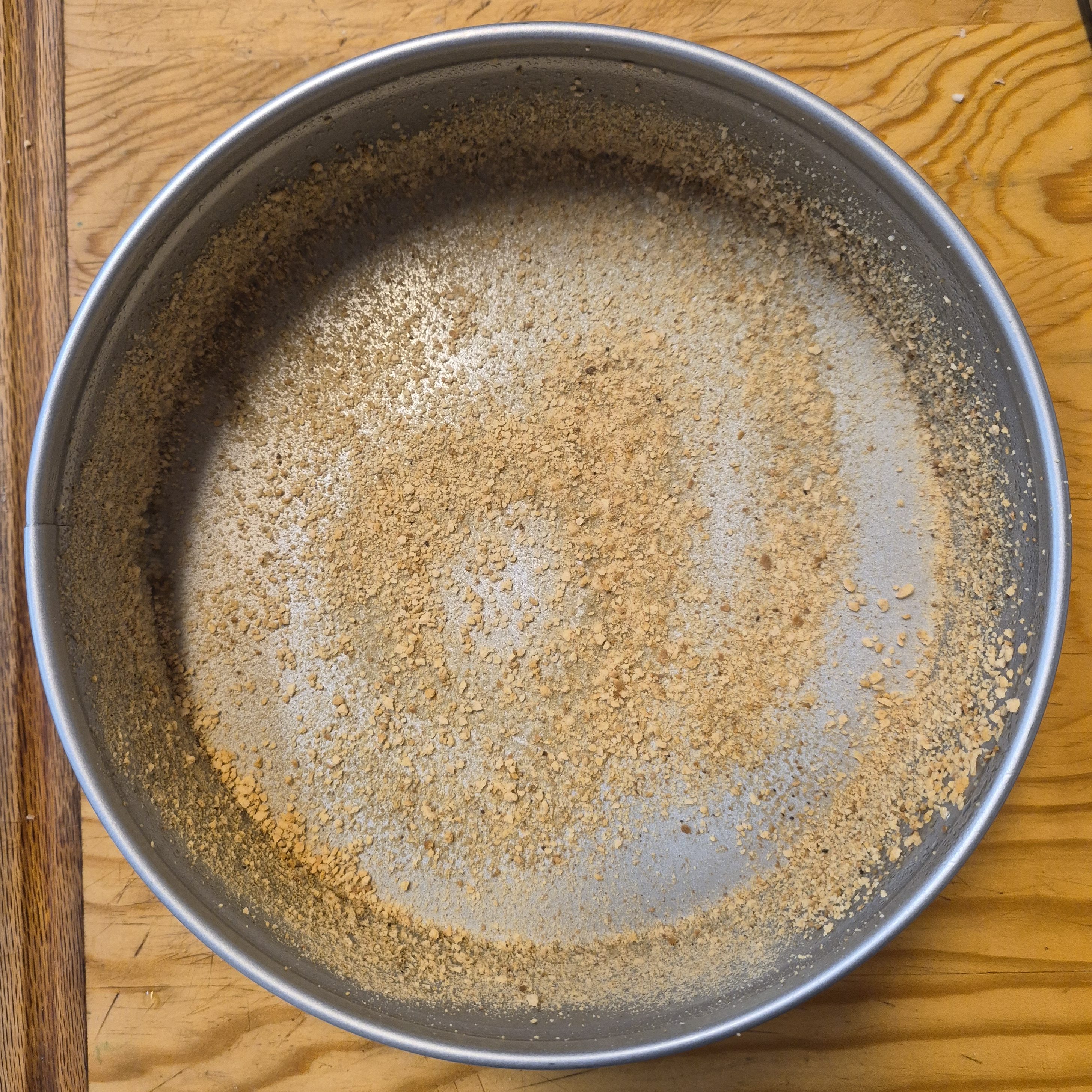
I did spend too much time thinking if “sides” also includes “bottom”, but in any case, this wasn’t happening
Also…have you ever had a cheesecake where the crumb is just on the side? I feel it’s much more common for no-bakes to simply not have crumb at all, like those cheesecake squares they sell in the frozen section or wherever.
Okay, So It’s Just The Crumb Construction That Didn’t Cut It
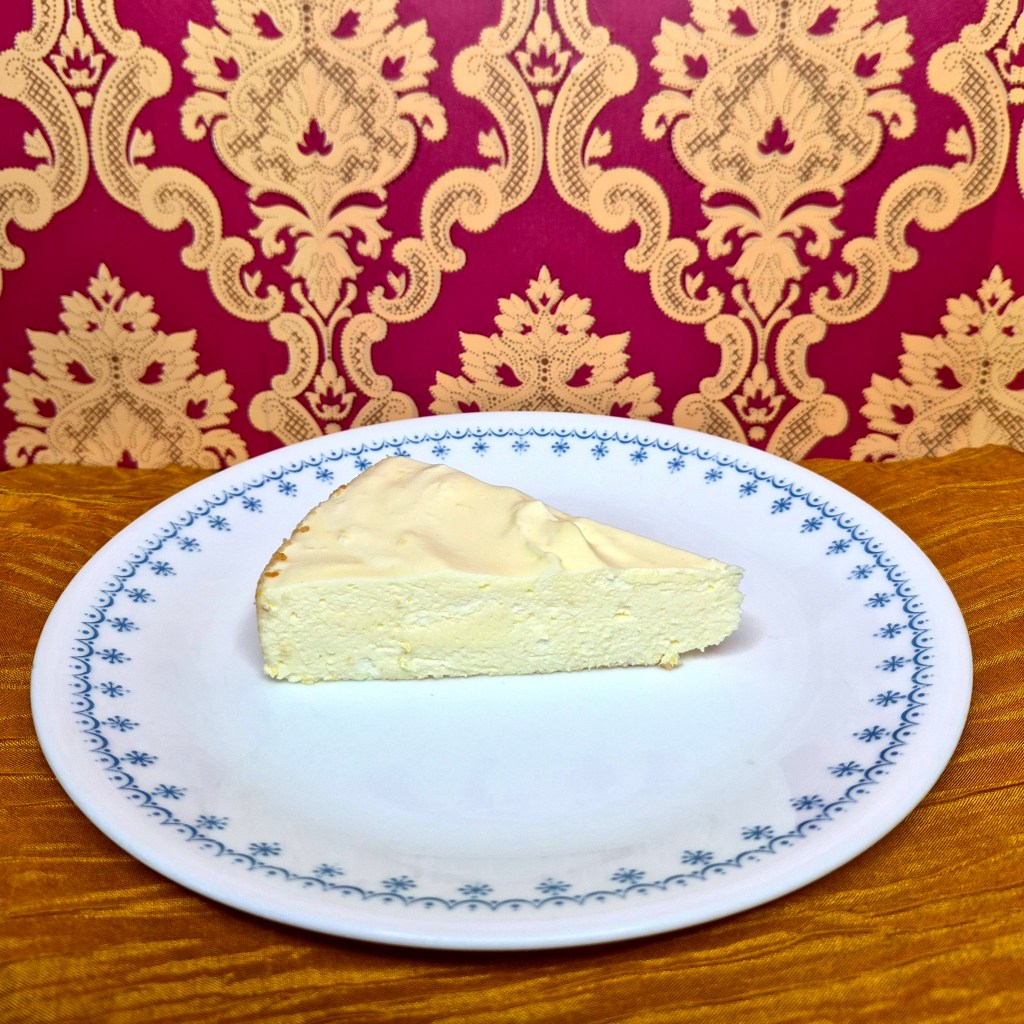
This lemon cheesecake is too lemon-y.
To begin, some of you might point to the fact it has Lemon Jell-o and actual lemon in it. But I can tell you that Lemon Jell-o is actually a neutral flavor when you mix it with dairy. If you make it by itself, yes, it’s gonna be lemon-y. But it’s the go-to to set vanilla flavors in layered molds precisely because it doesn’t interfere with anything. So it made perfect sense to me that a lemon cheesecake recipe would require additional lemon flavoring agents.
As for the “juice of one lemon” and “zest of two lemons”, I made a point of selecting what I thought was a normal-sized lemon from the bounty my backyard tree curses blesses us with, and also used what I thought was common sense to…not use that much zest. I’m juicing one lemon, I’m zesting one lemon. But it’s so lemon-y! Is an ‘average lemon’ just smaller than I thought? Are my lemons abnormally juicy- wait, that sounds like I’m talking about fanfics I posted to Livejournal. Hypothetically. Let me save you a trip to the Wayback Machine.
The moral of the story is, recipe writers, none of this “10~12 medium apples” or “juice of one lemon” nonsense. I’ll put up with egg discrepancies, cuz you would have no way of knowing the future is Jumbo
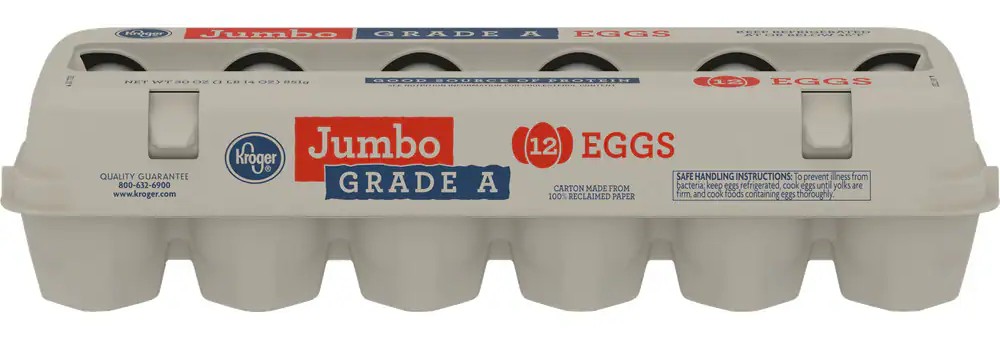
International readers, let me know if you too can buy eggs in a size that spits in the face of God
But there’s always been variations in produce size, so there’s no reason to not just give me an actual measure here. Oh, also, it wanted you to do most everything in the blender?! Listen readers, never trust a recipe that wants you to dissolve gelatin powder in a blender. I’ve run into these before, and it doesn’t work and you can’t easily see that it didn’t work. Do it in a mixing bowl like God intended, if only to cancel out any egg-size-related debts incurred in previous culinary escapades.
In the recipe’s defense, it does advise you to serve with fresh fruit. I didn’t, cause all we have in the house are grapes. And lemons, but I don’t think that was part of their Fresh Fruit set. You know, like the joke about INT is knowing tomatoes are fruit and WIS is knowing they shouldn’t be in a fruit salad. My resident taste tester and I both agree it would likely benefit highly from some sort of raspberry jam situation, but I didn’t have that in the house either. It also benefitted texturally from setting overnight instead of just the recommended 4 hours. I’m sorry this blender-free version dirties multiple mixing bowls, but I promise there’s not really a more efficient way to do it and get everything blended properly.
Recipe
Yield: makes approximately one 8~9-inch cheesecake,
but you can pour this into anything federal and local jurisdictions allow.
1 3-oz package lemon gelatin dessert mix
⅔ cup boiling water
16 oz of cream cheese
Juice and zest of one (small) lemon
1 cup heavy cream
- In a small bowl, dissolve gelatin in boiling water and set aside. Pop a large metal mixing bowl in your refrigerator.
- If need be, soften cream cheese by popping it in the microwave 10 seconds at a time. In a large bowl, whip cream cheese with an electric mixer until…whipped.
- Pour dissolved gelatin into the cream cheese bowl and stir until incorporated a bit. Then finish off fully blending with the electric mixer. (This is to avoid excess splashing.)
- Retrieve your lightly chilled metal mixing bowl and your heavy cream from the fridge and whip the cream until you get soft peaks or so.
(I do this by hand with a balloon whisk so I don’t have to wash the beaters on the electric mixer. If you would prefer to use the mixer to do all the work, I would recommend whipping the cream first before whipping the cream cheese, which won’t necessitate you cleaning them in-between.) - Add the whipped cream, lemon juice, and lemon zest to the cream cheese mixture and fold to incorporate.
- Pour cream cheese mixture into mold(s) of choice and refrigerate for at least 4 hours, if not overnight. Serve with some sort of jam topping.

