
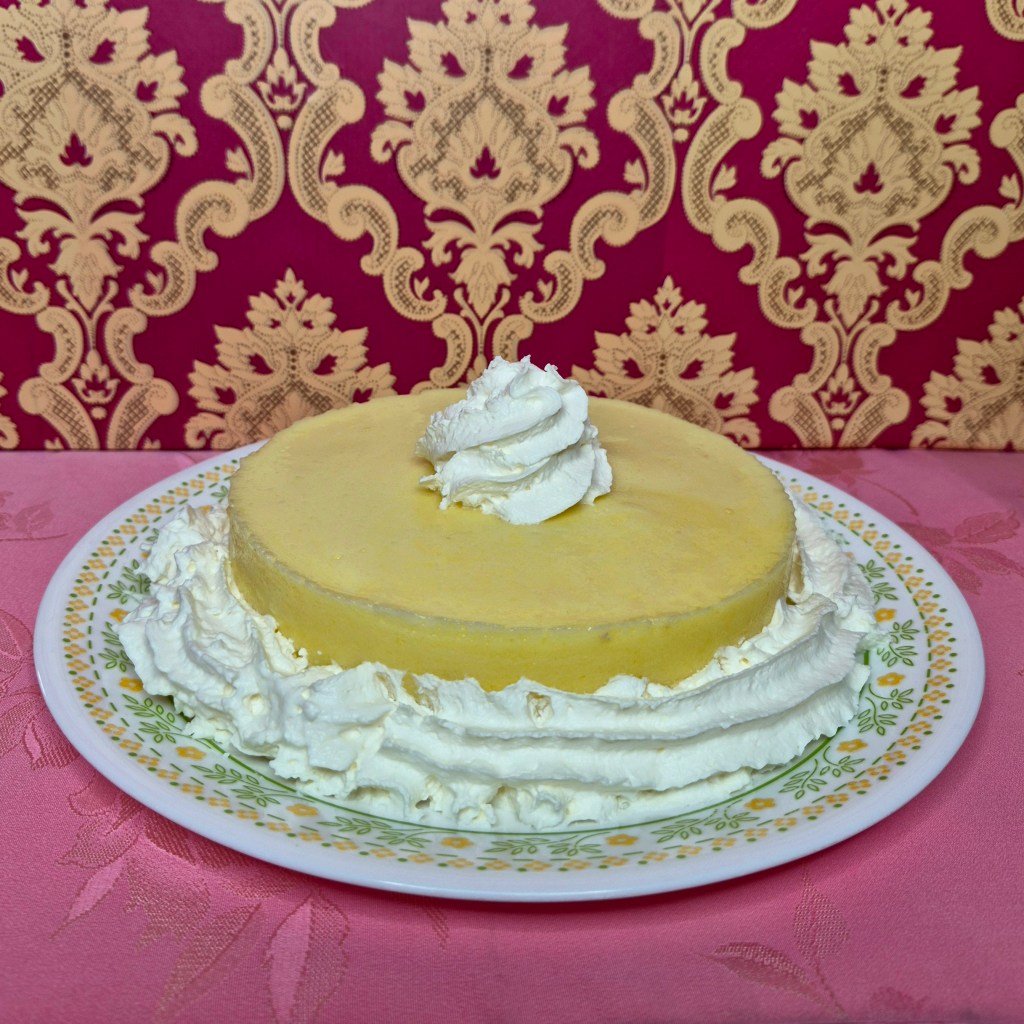
The conclusion of this year’s Jelly July is something I’ve wanted to test for a long time – can you make a chiffon pie with pasteurized egg whites?
Where’s The Rainbow Ribbon Mold
Hold your gelatin-containing horse hooves, y’all. I have more or less resigned myself to trying to make one of those again, but not only is it an undertaking, it also is a Big Dessert, and I’m down to one taste-tester besides myself. In short, there’s a lotta logistics involved, and Jelly July is full of scheduled decisions as it is. Check back in a month.
What’s A Chiffon Pie
I’m glad you asked, imaginary reader I use as an organizational device. Chiffon pies are a type of no-bake pie, like cream pies, pudding pies, or parfait pies. But in contrast to those, you don’t really see chiffon pies anymore, even though they used to be fairly popular. If you look in dessert focused cookbooks from the 20th century, you’ll prolly find a recipe for one or two.
What separates it (ba-dum tsh- actually no wait that joke depends on you already knowing what a chiffon pie is. Disregard.) What differentiates it from those pies is the ingredients – for many of these pies, if you want a light and airy texture, you fold in whipped cream, or something meant to approximate it, like Dream Whip🄬 or Cool Whip🄬, et cetera. And then you use gelatin to help the pie set, resulting in something akin to a Bavarian Cream, or a Charlotte Russe.
A chiffon pie, in contrast, achieves its lightness by incorporating a meringue into a gelatinized curd. Which you don’t bake. Cuz it’s a no-bake pie.
So It’s A Salmonella Pie
Well! I’m well aware the US is often a target of food safety criticisms, especially with all the shenanigans going on right now. And yes, our egg industry is definitely a bit…wonky compared to those in other industrialized countries. Without getting too deep in the weeds though, I think my fellow Americans will agree the decline of chiffon pies in the US has more to do with changing cultural attitudes about food safety, moreso than a sudden increased risk in contracting salmonella in the 21st century compared to decades past.
To be clear, since it does unfortunately have to be said, I am not advocating against food safety practices. As the saying goes, these sorts of things are written in blood. My first cooking instructor was always very clear “when in doubt, throw it out”, which is one of the many reasons I get so annoyed by those misleading newspaper articles trying to blame individual households for overproducing food waste as opposed to, you know, the restaurant industry, or any industry at all. Food spoils! (Also how are they disambiguating between normal waste from food prep versus…you know never mind.)
But food safety regulations are also often simplified into easy to remember, general guidelines so that they can be disseminated quickly and effectively to the general public- well, let’s be real, to housewives, that part hasn’t changed, it’s just repackaged turn of the century household rationalization.
Getting Deep In The Weeds
To give a clear example, you can look at the USDA’s recommendations for cooking poultry. Previously, they recommended different temperatures for different parts of the bird versus the whole bird (confusing), and those temps ranged from 170F to 180F. Anyone who’s cooked a turkey for the day when many Americans eat turkey knows that a 180F bird will need a whole heck of a lot of gravy. So predictably, a lot of people ignored this advice, not based on any sort of personal risk assessment, but because to follow it resulted in a very poor eating experience of a dietary staple.
In 2006, the USDA lowered its recommended poultry temp to 165F, which is a big difference! And all the temps provided by the USDA are what gamers might call “OHKO” temps, where you’re for sure good to go. While chefs aren’t reliable disseminators of food safety advice, many will rightly tell you that you can hold food at a slightly lower temperature for a longer amount of time and achieve the same level of safety…as the USDA itself did in 2011 when it lowered the safe temp for pork to 145F, providing you “allow it to rest for 3 minutes”.
“With a single temperature for all whole cuts of meat and uniform 3 minute stand time, we believe it will be much easier for consumers to remember and result in safer food preparation,” said Under Secretary Elisabeth Hagen in the USDA’s news release. “Now there will only be 3 numbers to remember: 145 for whole meats, 160 for ground meats and 165 for all poultry.”
https://www.foodsafetynews.com/2011/05/usdas-new-recommended-pork-cooking-temp-145f/
Fun fact: a lot of trichinosis cases in the US are from people eating stuff they hunted in the woods, like bear jerky
Back To Eggs
My meatless chiffon pie’s meringue isn’t held at any hot temperature before being chilled, so according to the latest science, we’re still not in the clear in terms of foodborne illnesses. But as we saw, people don’t necessarily follow government guidelines anyways. So why are they not still eating uncooked meringues?
(Spoiler: because they’re too busy eating raw cookie dough.)
In 1926, [Monroe Boston Strause] made his most influential invention, the delicate chiffon pie, which is now considered dietarily incorrect because its filling, a cornstarch-thickened liquid folded into beaten egg whites, involves raw egg.
The Pie King by Charles Perry, Los Angeles Times – January 9th, 1997 (emphasis mine)
Notice that this writer reporting on the celebrity chef who invented the chiffon pie doesn’t use a word like “unsafe” to imply it’s risky to eat such a pie. No, it’s “dietarily incorrect”, i.e., out of line with our contemporary mores on what people should and shouldn’t consume.
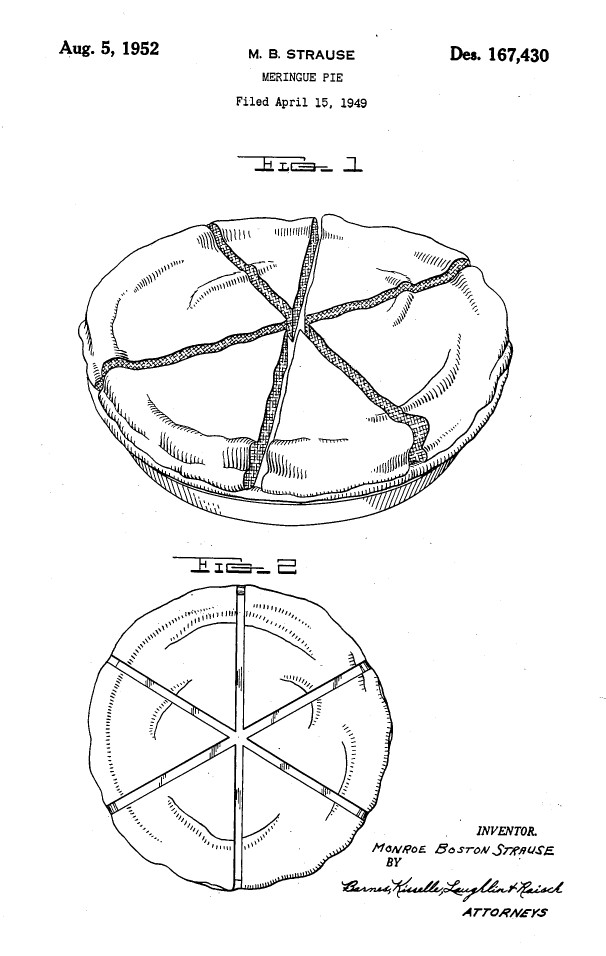
Today in things you can apparently patent – a specific pile of meringue
I distinctly remember when I first noticed warnings printed on bags of flour commanding DO NOT CONSUME RAW FLOUR. Maybe these warnings were always there, but not as prominent. Looking at the CDC’s website on the issue, I noticed a few things.
One, they seem to really be focusing on raw chocolate chip cookie dough, which also contains, yep, raw eggs.
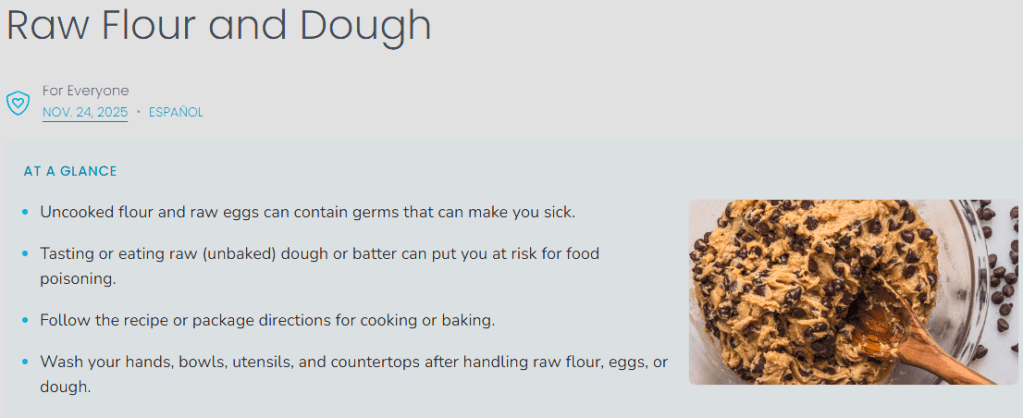
Weirdly, the real world example they link to at the bottom of this article involved raw cake batter…
they couldn’t find a choco chip cookie case study?
This is kind of a …I don’t know, cultural touchstone? for Americans, and I can’t remember exactly when there was suddenly a lot of public health messaging about not eating raw cookie dough. It’s such a salient issue that the two major manufacturers of prepared chocolate chip cookie dough used to have competing labels on their products – Nestle Tollhouse warning you to not, as their product contains raw egg, whilst Pillsbury reassuring you can, as they’ve food engineered theirs to be safe for raw consumption. Personally, I think Pillsbury execs made the right decision here – anybody buying already made cookie dough from the store is highly likely to just eat that stuff straight outta the fridge. And based on recent searches, Nestle has followed suit.


I do think Pillsbury erred with the label language – safe to eat raw is just…you know. Make your own joke.
Anyways, luckily the CDC website has some hard numbers, which support my memory that prominent warnings about raw flour on packaging are prolly fairly recent.
CDC investigated outbreaks linked to raw flour or cake mix in 2016, 2019, 2021, and 2023. Some of these investigations led to recalls.
No Raw Dough, from the CDC website
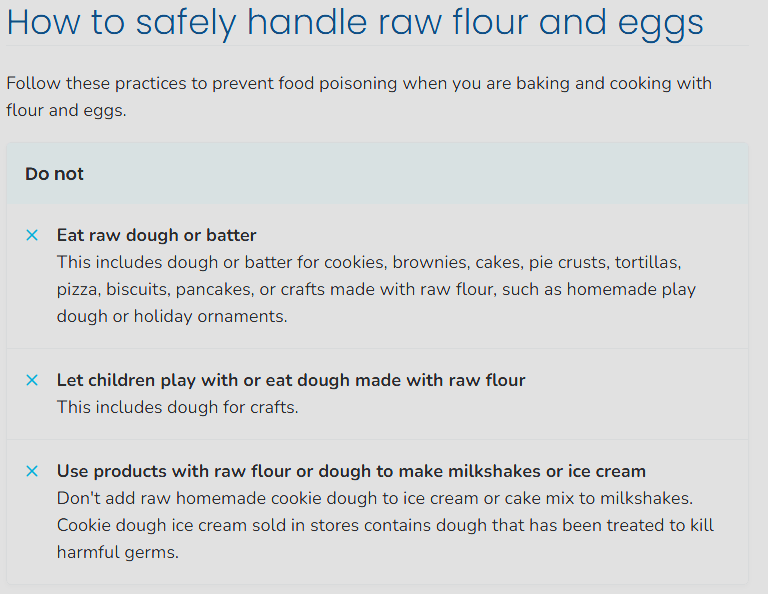
Do Not: format your list of do’s and don’ts like this.
My point is that you can far more easily successfully shame the public into not eating raw cookie dough versus not eating a moist, juicy piece of chicken, and this likely contributes to warnings about the dangers of uncooked eggs being taken a little more seriously when it comes to salmonella.
I Forgot What You Were Making
A sanitary chiffon pie! With pasteurized egg whites. Thanks I think to people’s dietary anxieties about egg yolks, yet another thing science has been a little back and forth about, you can just buy a carton of egg whites next to the milk and stuff.
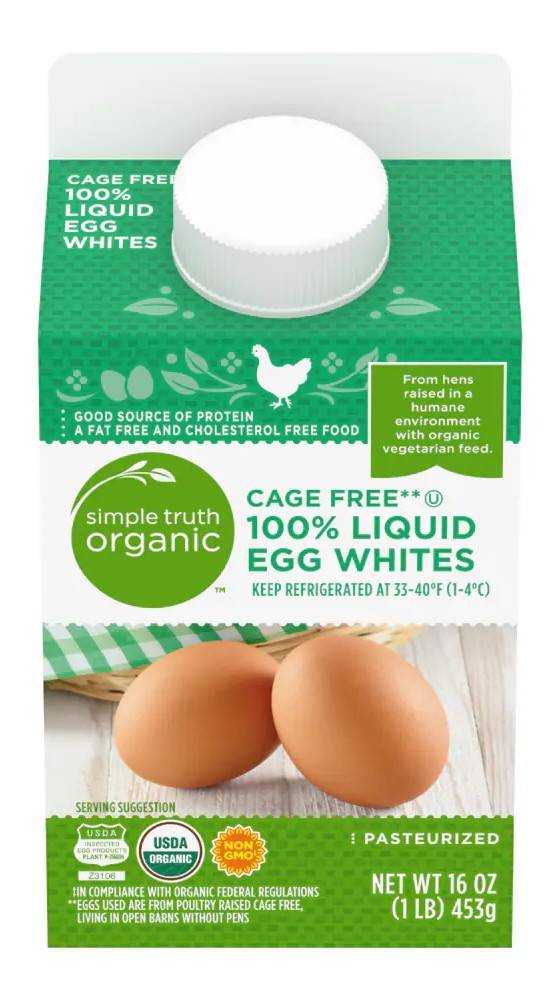
This implies you can buy partially liquid egg whites
Ostensibly, since these have been pasteurized, problem solved, right? Well…as reviews of such egg whites will tell you, these don’t quite whip as well as their fully raw counterparts. Specifically, people are fairly consistent in warning you that you can’t achieve “stiff peaks”, a common goal for meringue making. So this chiffon pie was a bit of an experiment in two ways.
- Can you achieve stiff peaks with pasteurized egg whites?
- Do you even need stiff peaks to achieve the desired chiffon texture?
Since I’ve already blabbed quite a bit here, I’ll cut to the chase and tell you the answer to these two questions is “probably not” and “no, actually”. Using an electric mixer, a copper bowl, and the pinch of salt the recipe called for, I did not achieve stiff peaks after roughly 5 minutes of whipping the egg whites with sugar. Frequent meringue makers will clock that this was a solid attempt at stiffness. And I doubt adding cream of tartar or any other stabilizing agent would have made any significant difference.
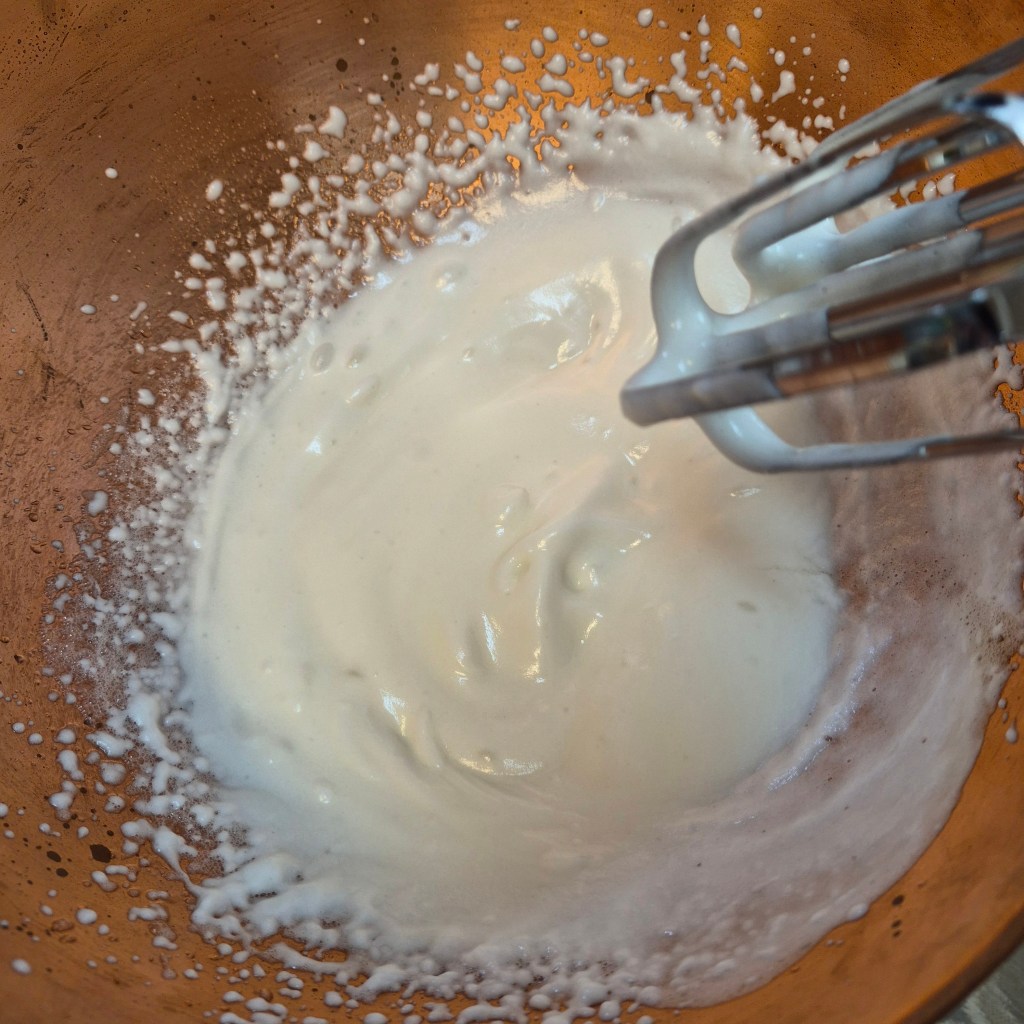
I tried
I did, however, achieve something on the low end of soft peaks, which is often where I stop with meringues, and honestly, I think the pie came out fine.
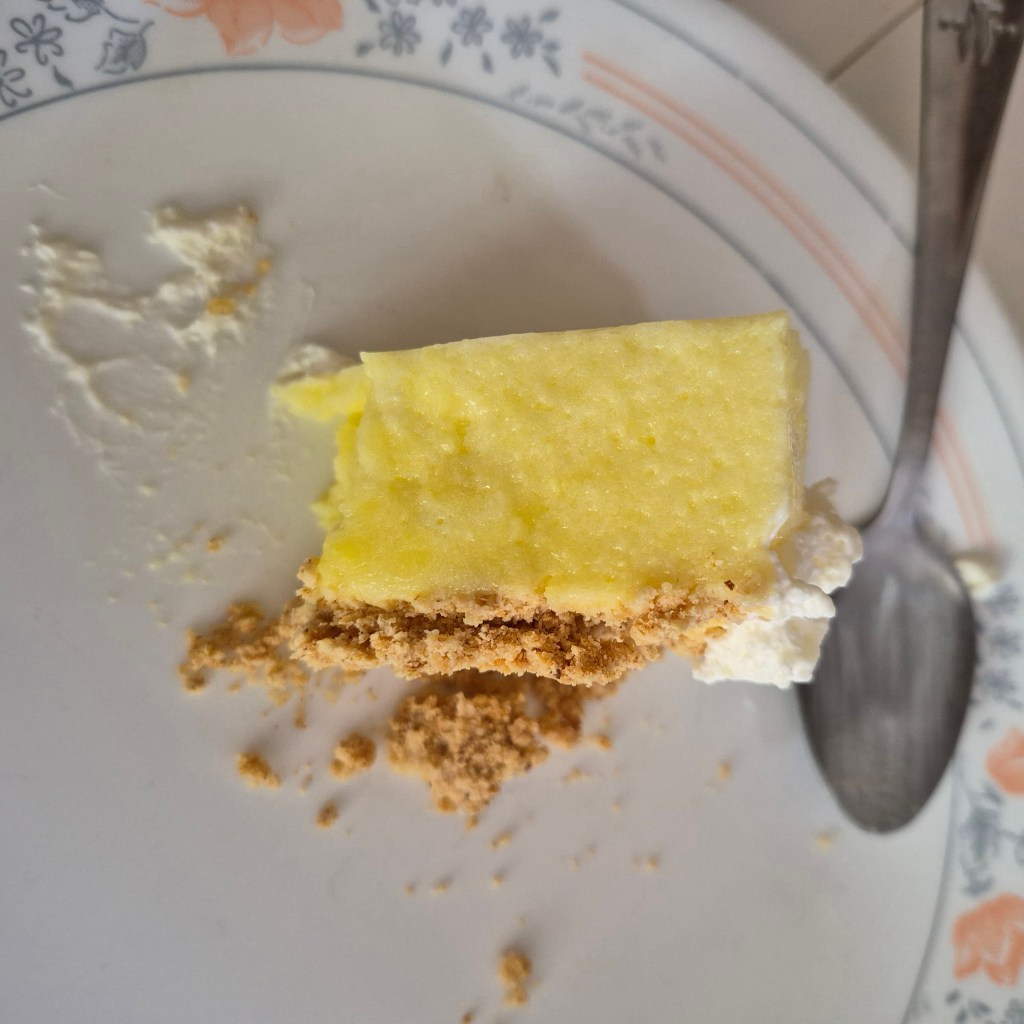
Roll that beautiful bubble footage (now you know how old I am)
I was very pessimistic because, in addition to my brain being extra spicy the morning I was making this pie, I realized the recipe I was using (from my standby The New Joys of Jell-o🄬) was a little strange. Usually you make a lemon curd-type deal, dissolve the gelatin in it while it’s hot, wait for it to cool, and fold the meringue into it. This recipe wanted me to just put the yolks and sugar in a saucepan without first whipping them to the ribbon stage, oh and also, throw a cup of water in there? I decided to whip the eggs and sugar in the pan a bit beforehand, and then despite my best efforts still slightly scrambled the corners, but hey, I’ll just strain it…should be fine.
I also juiced the lemon before zesting it, and I can say with confidence it’s very difficult to zest a juiced lemon. And instead of just zesting one of the six other lemons on my kitchen table at the time, I got about a teaspoon or so off the sticky carcass and called it a day. Plus, my previous experience with the too lemon-y cheesecake bolstered my apathy about not meeting my zest target.
The last bit of trouble I ran into- no second to last, actually, but the last trouble that had anything to do with the recipe, at least – was incorporating the meringue. The recipe said to chill the curd mixture until “slightly thickened”, which is confusing, cuz it already was slightly thick on account of it being curd. I decided to just wait until the metal mixing bowl I dumped it into was cold, and so went to go do the dishes…and then played some mahjong on my phone…and then made the attempt. But my meringue just kind of floated on top, and it wasn’t folding. To be fair, the instructions wanted me to fold the curd into the meringue, and I defiantly decided to fold the meringue into the curd, but…would that have really done it? At any rate, I stuck the unincorporated mixture back in the fridge. One more east round later, I took it out and tried again, with better results. To add to the whole “but Kelp, you didn’t follow the recipe”, it advises you that you might need to “chill again, if necessary, until mixture will mound” before dumping everything into your pie dish, but this is supposedly after you’ve folded in the meringue, so…yeah. I don’t know.
Oh also the final bit of trouble was I half-assed my graham cracker crust and forgot these smaller springforms don’t really lend themselves to de-panning. I thought to hide the weird floating atop the pan gap that resulted from my poor plating with the classic fix of piped whipped cream, but by that point my hands had joined my brain in spiciness and I had a lot of difficulty smoothly piping around the edge. But eh, it could be worse.
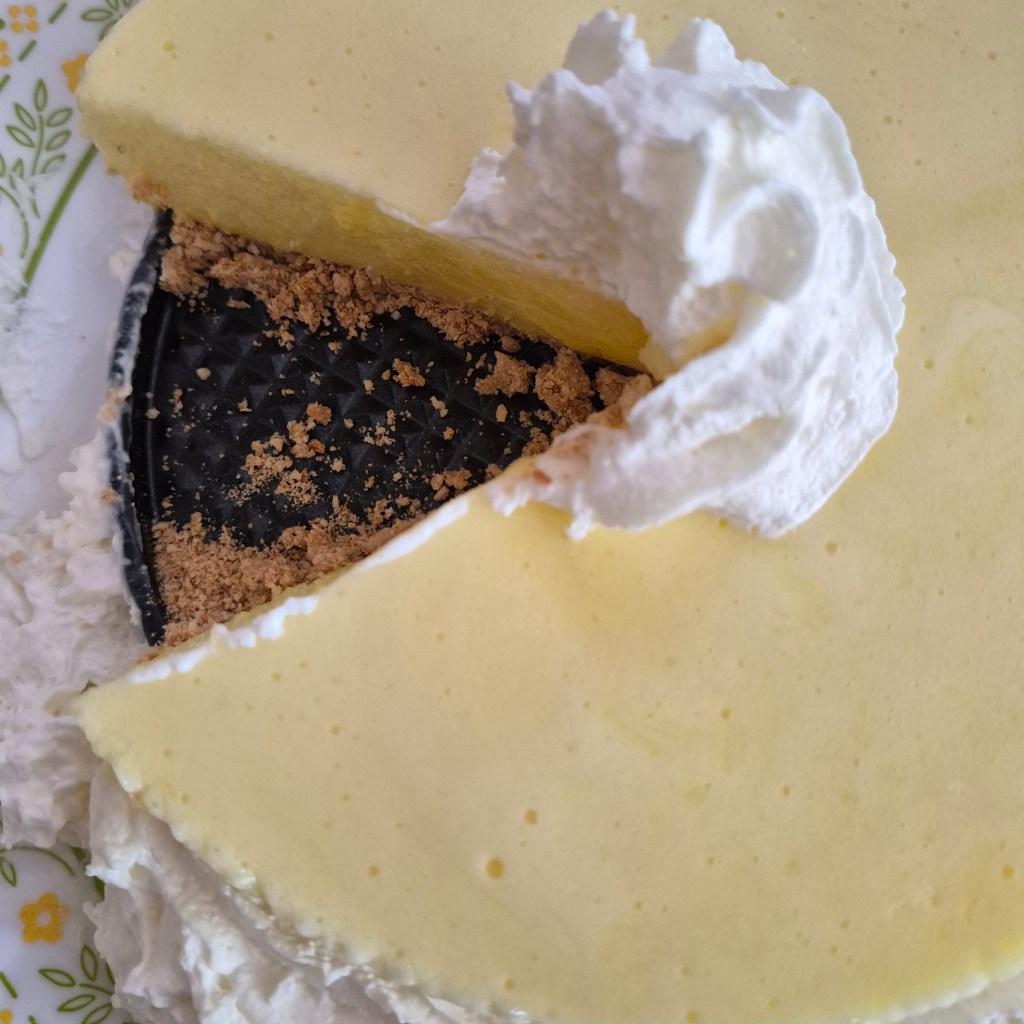
Photo evidence of my crust conundrums
This is my characteristically very long way of saying I’m not providing the exact recipe here. But unlike a digitized copy of Monroe Boston Strause’s Pie Marches On, I have faith that you’ll be able to easily find a better lemon chiffon pie recipe searching about on the internet.

